The real history of samurai and ninja is better than the movies: samurai were a hereditary warrior class that ruled Japan for nearly 700 years (1185–1868), while "ninja" — historically called shinobi — were covert intelligence agents whose own training manuals from the 1600s still survive.
Key takeaways
- Samurai dominated Japan from the Kamakura shogunate (1185) to the Meiji Restoration (1868); the 1876 Haitōrei edict ended their right to wear swords in public.
- Historical sources say "shinobi", not "ninja" — a 1603 Jesuit dictionary from Nagasaki already defined the word as a wartime spy; the "ninja" reading became standard only in the 20th century.
- Three major ninjutsu manuals survive: the Bansenshūkai (1676, compiled by Fujibayashi Yasutake from Iga and Kōga traditions), the Shōninki (1681, by Natori Masatake), and the earlier Ninpiden.
- The manuals teach espionage — disguise, infiltration, memory and psychology — far more than combat; the National Diet Library's overview calls them intelligence handbooks.
- Most pop-culture ninja imagery (black suits, sword-on-the-back, supernatural powers) comes from 20th-century novels and film, not period sources.
- In Tokyo you can see original armor at the Tokyo National Museum (¥1,000) and handle replicas at the Samurai Ninja Museum in Asakusa (from ¥3,000).
Who were the samurai, really?
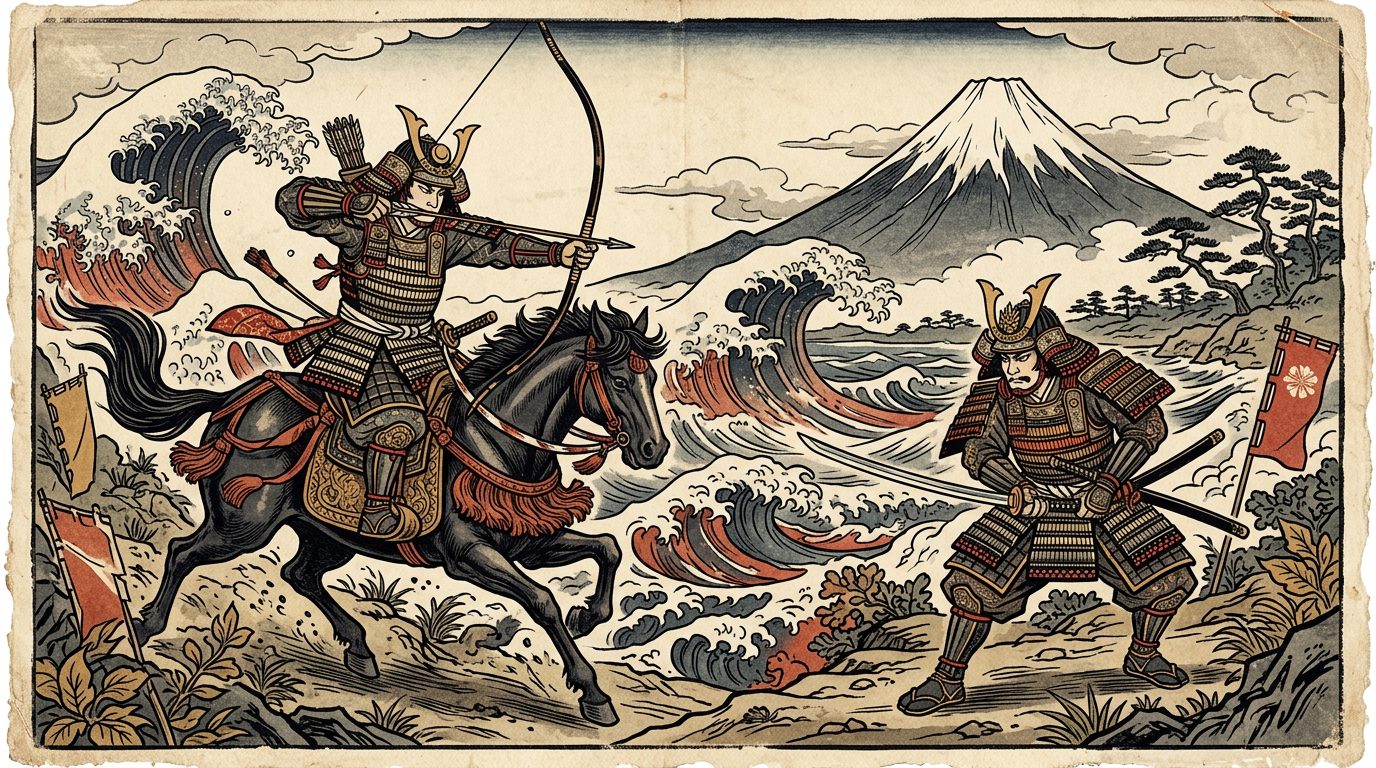
The samurai began as provincial mounted warriors and became Japan's ruling class with the founding of the Kamakura shogunate in 1185. For nearly seven centuries, military governments run by warrior houses — Kamakura, Ashikaga, then Tokugawa — governed Japan in the emperor's name. The popular image of the samurai as a swordsman is late and partial: for most of their history, the bow and the spear were the battlefield weapons, and the sword was a sidearm and a status marker.
The defining period for samurai mythology is the Sengoku era (c. 1467–1600), a century of civil war that produced the unifiers Oda Nobunaga, Toyotomi Hideyoshi and Tokugawa Ieyasu. It's also the period that made covert operatives indispensable — which is where the shinobi enter the record.
What does the historical record say about ninjas?
Strip away the film canon and the documentary trail is solid. The word used in period sources is shinobi (or shinobi no mono) — 忍, "to endure, to conceal". A Japanese–Portuguese dictionary compiled by Jesuit missionaries in Nagasaki in 1603 defines the term plainly as a spy who gathers intelligence in wartime. The familiar reading "ninja" is a modern pronunciation of the same characters that standardized in the 20th century and entered English in the 1960s on the back of spy fiction and film.
Shinobi were strongly associated with two neighboring regions — Iga and Kōga — whose autonomous villages developed and transmitted the craft. Their employment peaked in the Sengoku wars: scouting castle defenses, setting fires, carrying messages through enemy lines, and verifying rumors that armies moved on.
What do the surviving ninja manuals actually teach?
Three texts anchor everything historians can responsibly say about ninjutsu. The Bansenshūkai ("All Rivers Merge into the Sea", 1676) was compiled by Fujibayashi Yasutake to preserve Iga and Kōga traditions two generations after the wars ended — a peacetime encyclopedia of a wartime craft. The Shōninki ("True Record of the Shinobi", 1681), by the Kishū-domain instructor Natori Masatake, is the most psychological of the three: disguise, gait, reading faces, loosening tongues. The older Ninpiden rounds out the trio. Japan's National Diet Library characterizes them, accurately, as intelligence handbooks.
What's striking is the ratio: pages on infiltration, observation, memory techniques and ethics vastly outnumber pages on fighting. The Bansenshūkai opens with seishin — correct heart — arguing that an operative without discipline and loyalty is merely a burglar. Combat, where it appears, is an exit strategy.
Which famous "ninja facts" are actually modern inventions?
| Pop-culture image | What the record shows |
|---|---|
| All-black ninja suit | Kabuki stage convention — stagehand dress signaled "invisible" to audiences |
| Sword worn on the back | No period evidence; impractical to draw — a film-era visual |
| Supernatural assassins | Manuals describe scouts and spies; killing is barely covered |
| Hattori Hanzō, ninja master | Recorded as a samurai general commanding Iga men; "ninja" rebranding is 20th-century |
| The word "ninja" itself | Period texts say "shinobi"; the ninja reading standardized in the 20th century |
Most of the visual canon. The all-black suit comes from kabuki stagehand conventions — dressing a character like the "invisible" puppeteers signaled stealth to the audience. Swords worn on the back, smoke-bomb vanishing, and ninja-vs-samurai duels are products of 20th-century pulp fiction, manga and film. Even Hattori Hanzō — pop culture's archetypal ninja master — appears in period records as a samurai general under Tokugawa Ieyasu who commanded Iga-region men; his rebranding as a ninja is largely a 20th-century literary development.
None of this makes the history smaller. A real intelligence network with surviving training literature from the 1600s is more interesting than a smoke bomb.
Where can you see the real history in Tokyo?
Two stops cover it. The Tokyo National Museum's arms-and-armor gallery in Ueno shows the primary objects — original 12th–19th century armor and National Treasure blades — for ¥1,000. The Samurai Ninja Museum in Asakusa handles the experiential side: replica tools, armor you wear, shuriken you throw, and English guided tours daily (from ¥3,000). Visiting with children? The museum's ninja training for kids teaches the shinobi story at throwing-star height, and the sword lesson covers the katana basics the manuals took for granted.
How did we source this article?
Claims trace to primary-source scholarship rather than attraction marketing: the surviving manuals (Bansenshūkai 1676, Shōninki 1681), the National Diet Library's ninjutsu-literature overview, and standard reference works on the samurai class and the Meiji-era edicts. Where pop-culture origins are asserted — the black suit, the Hanzō myth — we note them as interpretive consensus among historians of the genre. Museum prices and hours were verified June 2026; we earn a commission on experience bookings via our links (disclosure).
FAQ
Samurai and ninja history — frequently asked questions
Were ninjas real or just a legend?+
What is the difference between samurai and ninja?+
Where does the word 'ninja' come from?+
When did the samurai era end?+
What did real ninja training involve?+
Can I see real samurai armor and ninja tools in Tokyo?+

History You Can Pick Up
Read the real story, then throw the shuriken. English guided tours in Asakusa daily, from $23.
Book the Asakusa Museum →